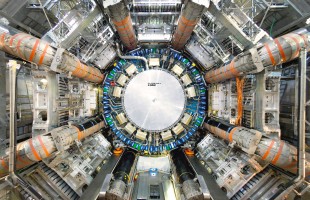
At CERN in Geneva, work has begun on cooling a 95-meter-long test setup for a new component of the even more powerful LHC accelerator.
Starting this summer, CERN’s LHC accelerator will be converted into a machine with even more intense proton beams. This HiLumi LHC is scheduled to go into operation in 2030 and will deliver ten times more proton collisions than the current accelerator. This will provide researchers with even more measurement data.
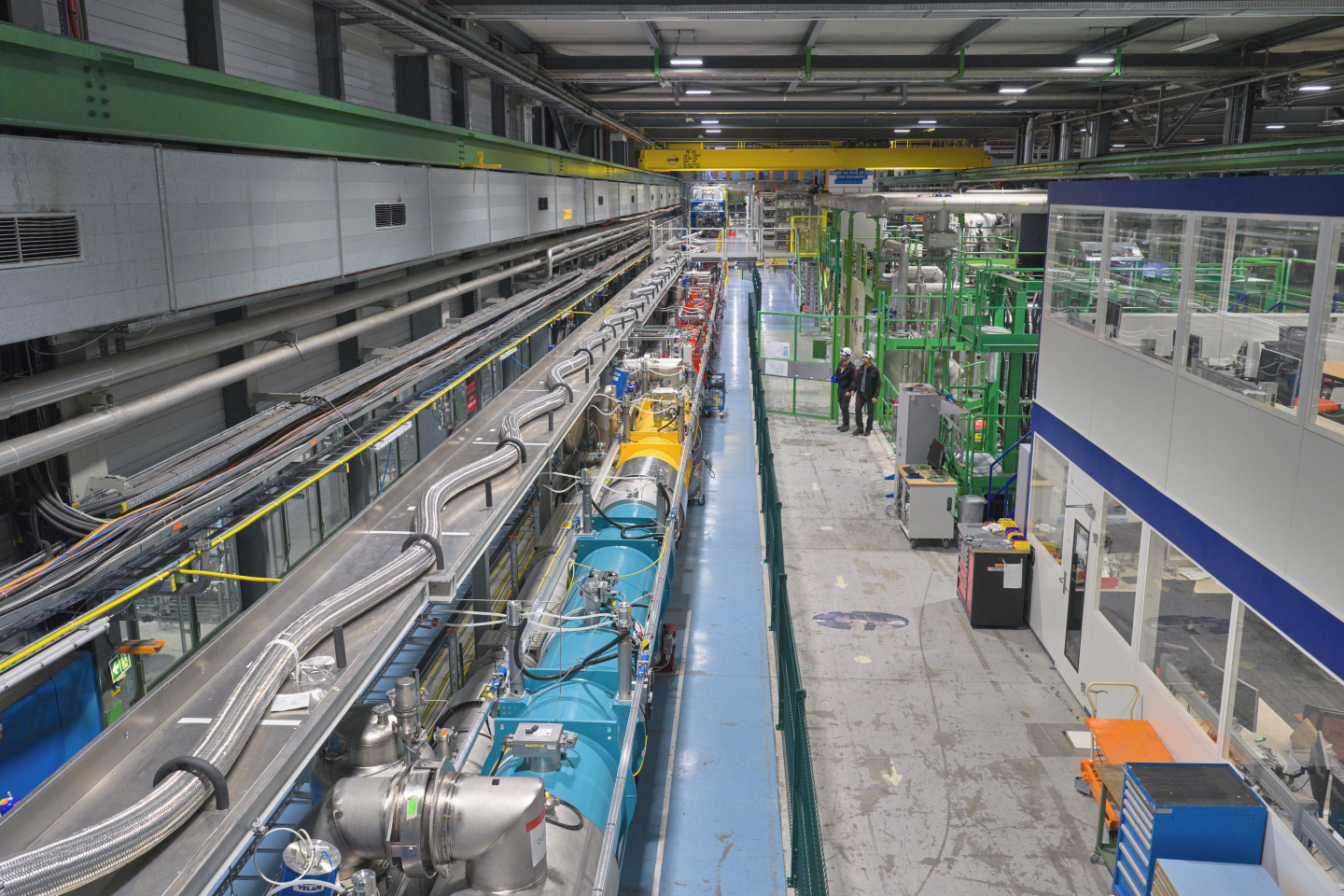
The above-ground setup is a full-scale replica of the equipment that will be placed underground in the LHC accelerator in the coming years. This week, the equipment began to be cooled down to a final temperature of 1.9 kelvin (-271 degrees Celsius), a process that will take several weeks.
The device includes a new type of superconducting magnets that focus the proton beam in the accelerator better than before. For the first time, superconducting niobium tin has been used in the magnets instead of the current niobium titanium. These magnets will be used on both sides of the ATLAS and competing CMS detectors.
A number of other innovations will also be implemented in the HiLumi LHC. These include crab cavities, magnet systems that place the beam under a small bow before it collides with the detectors, resulting in more hits. New techniques will also be incorporated into the superconducting power supply to save energy.
“I don’t think the importance and excitement of the HiLumi LHC, which is the biggest project CERN has undertaken in 20 years, can be overstated,” says CERN Director-General Marc Thomson.
“With new data tools and detector upgrades, it will enable us for the first time to measure the self-interaction of the Higgs particle, a crucial piece of information that will shed light on the early universe and its possible end. HiLumi LHC will enter uncharted territory and may reveal new and unexpected things. That’s what it means to explore the unknown: we don’t know what’s out there.”
All components of the test string have already been tested individually, but will work together for the first time, says CERN accelerator director Oliver Brüning. “This will allow us to optimize our procedures before installing them in the tunnel.”
Starting in the summer of 2026, the LHC accelerator will undergo four years of renovation, the third long shutdown in its existence. During that time, the detectors will also be further prepared for the deluge of proton collisions in the new accelerator.
Nikhef is closely involved in the upgrade of the ATLAS detector. Together with partners, the Netherlands is building one of the new end sections of the detector, the ITK.
Source: CERN