Marcel Merk: Teaching
Menu:
Updated:
Sept 21, 2023
High School Course, 2nd year Cygnus gymnasium Amsterdam:
"Het Quantum Universum" - 2014
A high school course on the macro and mini universe in dutch. The goal of the lectures is to stimulate curiosity on fundamental questions about nature at its smallest and largest scales. The slides are:
Les 1: Het macro univesrum deel 1: De Aarde in het Heelal.
Les 2: Het macro universum deel 2: Begin en Einde van het Heelal.
Les 3: Het micro universum: Bouwstenen van Materie en Kracht.
Les 4: Massa en het Higgs Boson.
Les 5: Materie en Antimaterie.
Les 6: Speciale en Algemene Relativiteitstheorie.
Les 7: Samenvatting.
1st year University Course: The Relativistic Quantum World - 2014, 2017, 2020, 2023
The Relativistic Quantum World is a first year university course on the concepts of special relativity theory and quantum mechanics. The course is given at the University of Maastricht for the third time in 2020 and consists of 10 one-hour lectures, divided of 5 Wednesday-evenings in the period March 4 - April 8, 2020.
Abstract
In the beginning of the previous century our fundamental view of nature revolutionised with the birth of the theory of relativity and of quantum mechanics.
In the course of the century a beautiful theoretical framework, called the Standard Model, was developed and its realisation in nature was step-by-step verified with the discovery of new, fundamental particles, culminating in the recent discovery of the Higgs boson.
The lecture series contains a mini-course of ten one-hour lectures. We discuss the fundamental elements of the special and general relativity theory and quantum mechanics with a particular emphasis on the counter-intuitive aspects of both theories; the relativistic quantum world is fundamentally different from our macroscopic world.
Lectures 1-8 of the course are included the lecture notes. Lectures 9 and 10 are given in colloquium style.
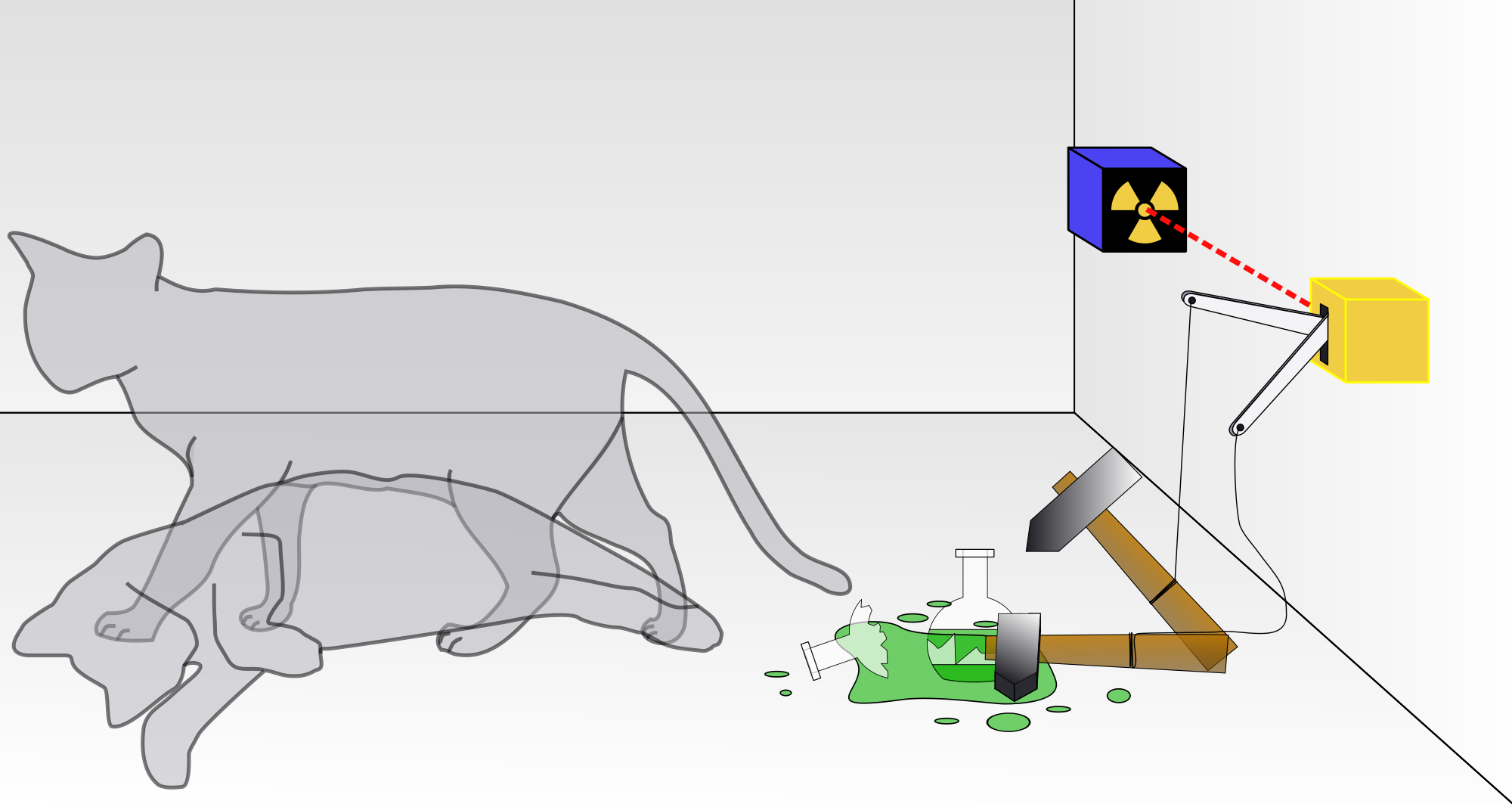 The Lectures are:
1: Principle of Relativity and the Speed of Light
(pptx,
pdf).
2: Time Dilation and Lorentz Contraction
(pptx,
pdf).
3: Lorentz Transformation and Paradoxes
(pptx,
pdf).
4: General Relativity and Gravitational Waves
(pptx,
pdf).
5: The Early Quantum Theory
(pptx,
pdf).
6: Feynman's Double Slit Experiment
(pptx,
pdf).
7: The Delayed Choice and Schrodinger's Cat
(pptx,
pdf).
8: Quantum Reality and the EPR Paradox
(pptx,
pdf).
9: The Standard Model
(pptx,
pdf).
10: The Large Hadron Collider
(pptx,
pdf).
Maastricht Science Program Course - 2020, 2021, 2022, 2023
PHY3004: Particle Physics
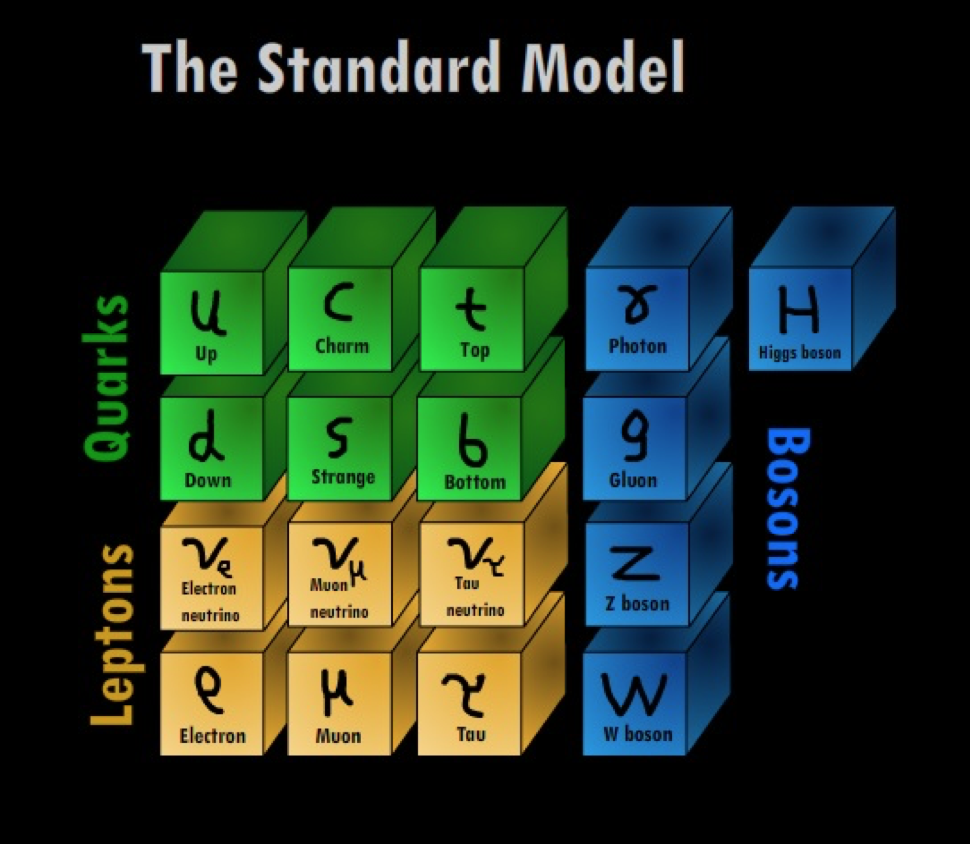 The MSP PHY3004 Particle Physics is a 3rd year bachelor course that pepares for a subsequent master study on (Astro-) Particle Physics. The course provides an introduction to the Standard Model of particle physics in 6 lectures going subsequently through the concepts of: particles, forces, waves, symmetries, scattering and detectors. It serves as a preparatory course for a subsequent master study on (Astro-) Particle Physics.
All organisatorial information on the 2023 course can be found on canvas and in the 2023 course manual.
Check the grading rubrics for the presentation. The tutorial sessions include topical discussions prepared by students on Mondays and Solving exercises on Thursdays.
The MSP PHY3004 Particle Physics is a 3rd year bachelor course that pepares for a subsequent master study on (Astro-) Particle Physics. The course provides an introduction to the Standard Model of particle physics in 6 lectures going subsequently through the concepts of: particles, forces, waves, symmetries, scattering and detectors. It serves as a preparatory course for a subsequent master study on (Astro-) Particle Physics.
All organisatorial information on the 2023 course can be found on canvas and in the 2023 course manual.
Check the grading rubrics for the presentation. The tutorial sessions include topical discussions prepared by students on Mondays and Solving exercises on Thursdays.
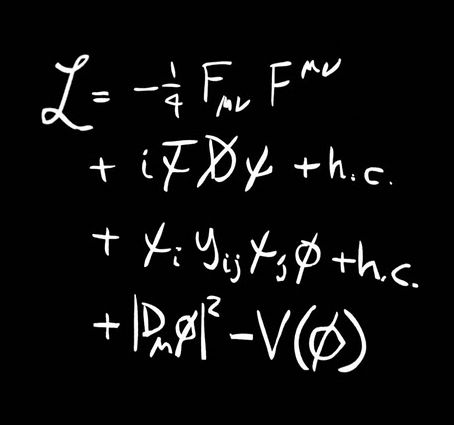 The main literature for the course is:
• David Griffiths:
"Introdution to Elementary Particles", second revised edition
Further literature, somewhat more advanced:
• Mark Thomson: "Modern Particle Physics"
• Francis Halzen and Alan D. Martin:" Quarks & Leptons: An Introductory Course in Modern Particle Physics"
• Lecture notes of the Nikhef: master course Particle Physics 1, see below on this web-page.
For a reminder on the basic concepts of relativity and quantum mechanics without mathematics, please have a look at the "Relativistic Quantum World" course listed above.
The Lectures are:Lecture-1: "Particles" (pptx, pdf, mp4-1, mp4-2, mp4-3, mp4-4), discussions and exercises.
Lecture-2: "Forces" (pptx, pdf, mp4-1, mp4-2, mp4-3), discussions and exercises.
Lecture-3: "Waves" (pptx, pdf, mp4-1, mp4-2), discussions and exercises.
Lecture-4: "Symmetries" (pptx, pdf, mp4-1, mp4-2), discussions and exercises.
Lecture-5: "Scattering" (pptx, pdf, mp4-1, mp4-2)), discussions and exercises.
Lecture-6: "Detectors" (pdf).
Lectures "Recap": (pptx, pdf).
Master Student Course: Particle Physics 1 - period 2003 to 2017
Particle Physics 1 is a 1-st year course on particle physics in the master program for experimental physics at the UvA, VU and UU. The course consists of 14 half-day lectures/tutorials and takes place in the 1st semester at nikhef. The first 10 lectures will be given by Marcel Merk and the last 4 lectures by Ivo van Vulpen. Further information can be found in this sheet. Course information can also be found on datanose.
The course covers an introduction to gauge theories and the standard model. The covered material can be found in several standard text books. The recommended book for this course is "Modern Particle Physics" by Mark Thomson. Older books, such as Halzen and Martin's "Quarks & Leptons: an Introductory Course in Modern Particle Physics" and in Griffiths' "Introduction to Elementary Particle Physics", second, revised edition, are fine as well. We strongly encourage students to acquire one of these books.
A write up of the course is available as a set of lecture notes. A printed copy of the notes will be handed out in the first lecture. The lecture notes consists of 14 chapters, each one consists of one lecures. Course exercises can also be found in the lecture notes. The course summary slides are here and here.
Abstract
The course Particle Physics 1 is an theoretical course on quantum electrodynamics and electroweak theory in the experimental master. It contains a single particle quantum mechanics treatment of perturbation theory leading to the Feynman rules of electromagnetic and electroweak interactions. The course starts with a discussion of wave equations for spinless particles followed by a Lorantz covariant description of the electromagnetic field. A recap of non-relativistic perturbation theory leads to Fermi's golden rule, which is extended to the relativistic scattering and an example of an electromagnetic scattering process of spinless particles is calculated.
 The second part of the course treats particles of spin=1/2: the fundamental fermions. The Dirac equation is derived and solutions are studied. The Feynman rules for fermions follow from the wave equations and the annihilation scattering process of an electron pair into a muon pair is calculated.
Subsequently the weak interaction is studied in analogy starting from the 4-point interaction model of Fermi. The V-A structure is discussed as well as the flavour changing aspects of the charged current interaction and the CKM matrix.
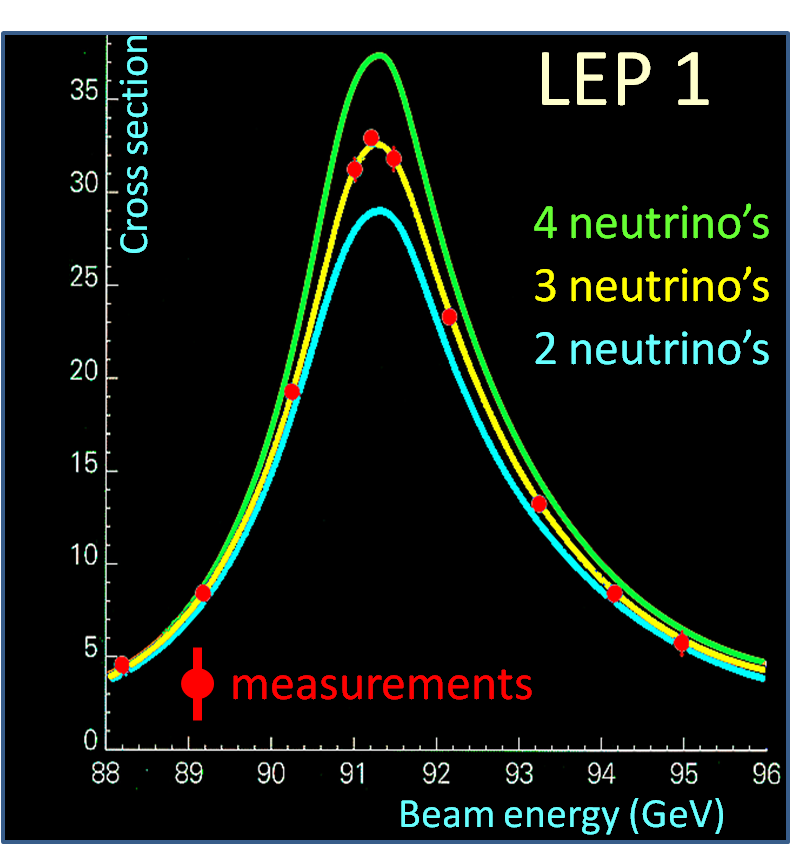
The final part of the course contains a discussion of the principle of local gauge invariance for electrodynamics as well as for electroweak interactions resulting from the Standard Model symmetry: SU(2) x U(1). The course concludes with the Born level calculation of the electroweak cross section of e+e- -> mu+ mu-process at the Z-pole and the observation of the number of neutrino generations by LEP-1.
Master Student Course: Particle Physics 2 ; CP Violation - 2022
The lectures for this course will take place at the UvA, see email information from Panos.
Lecture notes belonging to this course can be found here.
Here are slides for the lectures:
Week 1: CP Violation (pptx) (pdf). Exercises: (Lecture-1) , (Lecture-2).
Week 2: B-Mixing (pptx) (pdf). Exercises: (Lecture-3) , (Lecture-4).
Week 3: B-decays (pptx) (pdf). Exercises: (Design your experiment).
Graduate Student Lectures
Gradiate student lectures on Flavour Physics:
- "Flavour Physis and CP Violation" (pptx) , (pdf) . Nikhef Topical Lectures, March 31, April 1, 2022.
- "Flavour Physis and CP Violation"(pptx) , Pre-conference lectures of the 56th International Winter Meeting on Nuclear Physics, 2017, 2018, 2019.
- "CP Violation in the Standard Model" (pptx) , (ppt) , Nikhef Topical Lectures, Dec 12, 2007.
- "Flavour Physics and CP Violation" (ppt) , Belgium-Netherlands-Germany school, Sep 28-29, 2005.